
The Unseen Forces Driving Olympic Swimming to New Heights
Discover the intricate science behind the 100m freestyle, where milliseconds decide gold medals and human limits are constantly redefined.
The 100m freestyle stands as one of the most electrifying events in the Olympic Games, captivating audiences with its raw speed and nail-biting finishes. In this sprint, swimmers cover the distance in under 50 seconds, making it a true test of explosive power and endurance. The event's allure lies in its simplicity: a straight dash from end to end, yet beneath the surface, a complex interplay of physics and physiology unfolds. Over the decades, world records have plummeted, not just due to athletic prowess, but through relentless innovation in technique. As we delve into this aquatic spectacle, we uncover how science transforms human movement into record-breaking performances, setting the stage for a deeper exploration of the hidden mechanics that propel swimmers forward.
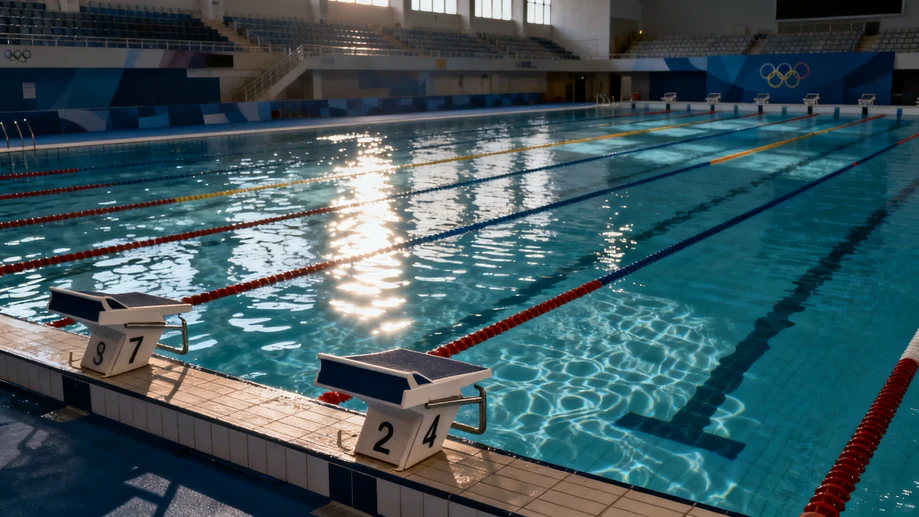
At the heart of the 100m freestyle is the start—a critical phase where races are often won or lost in the blink of an eye. Swimmers launch from the blocks with a precise sequence: a crouch, explosive leg drive, and streamlined entry into the water. This moment harnesses principles of biomechanics, such as center of mass optimization and angular momentum, to minimize air resistance and maximize velocity. Studies show that a perfect start can shave off 0.3 seconds, a significant margin in a race decided by hundredths. For instance, the angle of entry must be shallow to reduce splash and drag, while the body remains taut like an arrow. Transitioning from this explosive beginning, the focus shifts to maintaining momentum through the water, where every micro-adjustment counts.
Once submerged, swimmers enter the propulsion phase, where arm strokes and leg kicks generate thrust against the water's resistance. The freestyle technique, characterized by an alternating windmill motion of the arms, demands impeccable timing and strength. Each pull must engage large muscle groups—shoulders, back, and core—to create maximum force, while the flutter kick stabilizes the body and adds supplementary speed. Hydrodynamics play a pivotal role here; swimmers curve their hands to act as paddles, increasing surface area for better push. Moreover, body rotation around the longitudinal axis reduces drag by aligning the swimmer with the flow. This seamless integration of movement is not innate but honed through years of drills, where coaches analyze video footage to refine angles and rhythms. As we progress, the challenge intensifies with the need for efficient turns.
Approaching the wall for a turn introduces another layer of complexity, where split-second decisions impact overall time. In the 100m freestyle, one turn occurs midway, requiring a rapid flip that conserves energy and preserves speed. Swimmers execute a somersault-like maneuver, tucking tightly to minimize rotation time and pushing off the wall with both feet. This action leverages Newton's third law—equal and opposite reaction—to rocket them back into the lane. The push-off angle is crucial; too steep increases drag, while too shallow wastes momentum. Post-turn, swimmers glide underwater in a streamlined position, utilizing dolphin kicks for added propulsion before resurfacing. This phase alone can account for up to 15% of race time, emphasizing why elite athletes dedicate countless hours to perfecting it. Building on this precision, the final stretch demands mental fortitude.
As swimmers emerge for the last 25 meters, fatigue sets in, and the race becomes a battle of wills as much as muscles. Here, pacing strategies come into play; starting too fast risks early burnout, while a conservative approach may leave precious milliseconds on the table. Coaches employ data analytics to tailor race plans, using split times from previous events to optimize speed distribution. Breathing patterns also prove vital—limiting breaths to every few strokes reduces drag but requires exceptional lung capacity and oxygen efficiency. In this homestretch, the crowd's roar often fuels a final surge, where technique must remain flawless under duress. The culmination sees swimmers stretching every fiber to touch the wall, their bodies a testament to years of disciplined training. This relentless pursuit of excellence not only defines the event but also drives technological evolution.
Looking ahead, the future of the 100m freestyle promises even greater feats, fueled by advancements in sports science. Innovations like computational fluid dynamics simulate water flow around swimmers, enabling tailored gear designs that reduce drag without compromising flexibility. Training regimens now incorporate virtual reality to simulate race conditions, enhancing mental preparation. However, the core essence remains unchanged: a blend of human grit and scientific mastery. As records continue to fall, the 100m freestyle endures as a symbol of Olympic spirit, where unseen forces—physics, physiology, and perseverance—converge to push boundaries. For spectators and athletes alike, it's a reminder that in the pool's blue expanse, victory is written in the language of motion.