
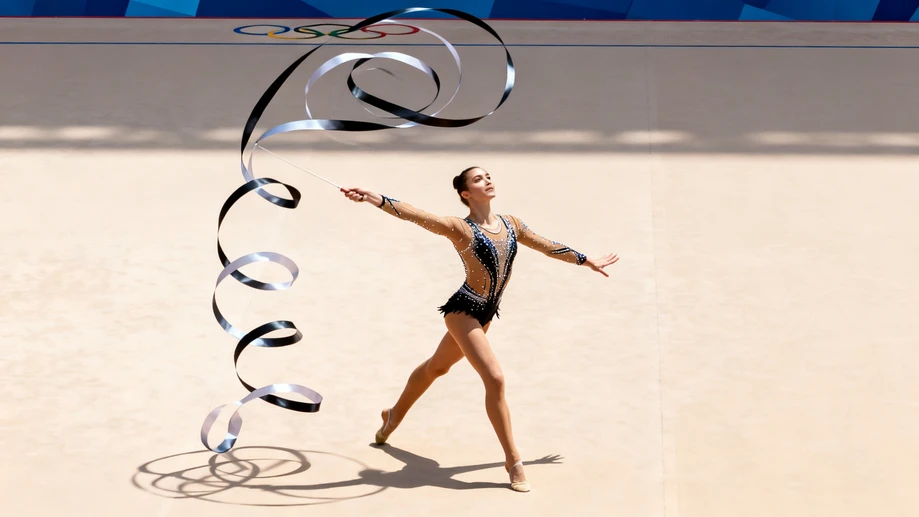
The Hidden Physics of Olympic Ribbon Twirling
Discover how the elegant movements in rhythmic gymnastics combine science and art to create a mesmerizing Olympic spectacle.
Rhythmic gymnastics, a staple of the Summer Olympics since 1984, captivates audiences with its blend of dance, flexibility, and apparatus manipulation. Among its five apparatuses—hoop, ball, clubs, ribbon, and rope—the ribbon stands out for its fluid, almost hypnotic motions. As gymnasts perform intricate twirls, throws, and catches, the ribbon unfurls in graceful arcs, creating a visual poetry that defines the event. This discipline demands not only athletic prowess but also an artistic sensibility, making it a unique highlight in the Olympic program. The sport's origins trace back to European exhibitions in the early 20th century, evolving into a competitive format that tests precision and creativity under intense pressure.
At first glance, ribbon twirling appears effortless, but it relies on fundamental physics principles. The ribbon, typically made of satin or a similar lightweight fabric attached to a wooden or plastic stick, responds to forces like centrifugal force and air resistance. When a gymnast spins rapidly, centrifugal force pulls the ribbon outward, creating wide, sweeping patterns that must stay taut to avoid tangling. Air resistance plays a crucial role too; as the ribbon moves through the air, its flow is influenced by speed and angle, requiring gymnasts to adjust their movements to maintain control. For instance, a fast twirl generates lift, similar to how an airplane wing functions, allowing the ribbon to float elegantly. This scientific interplay ensures that even minor errors—like a slight tilt—can disrupt the entire routine, emphasizing the need for flawless execution in Olympic competitions.
However, mastering these physical dynamics is only half the battle; rigorous training transforms theory into performance. Gymnasts spend years honing their skills through repetitive drills, focusing on hand-eye coordination and body alignment. A typical session involves practicing basic twirls and spirals for hours, gradually building to complex sequences like figure-eights or serpentine patterns. Strength and flexibility training are essential, as athletes must support their bodies while executing leaps and balances. Moreover, the apparatus itself adds a layer of challenge: the ribbon's length (up to 6 meters) and weight require precise timing to prevent it from dragging or knotting. This demanding regimen, often starting in childhood, cultivates the muscle memory needed for Olympic-level routines, where every movement must synchronize with music to maximize artistic impression.
Beyond the physical demands, the artistry in ribbon twirling elevates it to an Olympic masterpiece. Each routine is choreographed to music, with gymnasts interpreting rhythms through their movements, creating a narrative that resonates with judges and spectators. The ribbon's flow becomes an extension of the athlete's expression, symbolizing emotions like joy or tension through its undulations. In scoring, judges evaluate both technical execution and artistic composition, rewarding innovation in patterns and transitions. This dual focus ensures that the sport remains accessible yet profound, appealing to a global audience that appreciates its beauty. As the Olympics showcase this event, it highlights how science and creativity converge, turning a simple apparatus into a symbol of athletic excellence.
In conclusion, ribbon twirling in rhythmic gymnastics embodies the Olympic spirit through its seamless fusion of discipline and imagination. Its appeal lies in the delicate balance between calculated physics and spontaneous artistry, offering a spectacle that transcends cultural boundaries. As viewers watch the ribbon dance through the air, they witness not just a sport but a celebration of human potential, inspiring future generations to explore the boundaries of movement and expression.