
That Thin White Line Decides Football's Most Controversial Goals
How Offside Calls Shape Matches and Spark Debates From Stadiums to Living Rooms
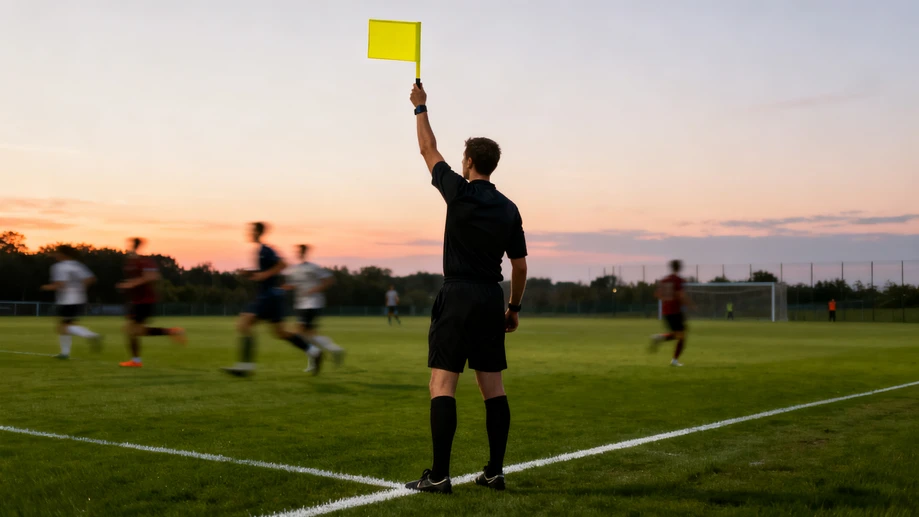
The sharp blast of the referee's whistle cuts through the roar of the crowd. A player wheels away in celebration, arms aloft, only to freeze as they see the assistant referee's flag raised steadfastly against the skyline. Offside. The goal is disallowed. Few moments in football elicit such instant, visceral reactions – jubilation turning to despair, relief flooding through defenders, and passionate arguments erupting everywhere the game is watched. This pivotal, often contentious, rule remains one of football's most fundamental and misunderstood laws.
At its core, the offside rule prevents goal-hanging. A player is in an offside position if they are nearer to the opponents' goal line than both the ball and the second-last opponent (usually the last outfield player plus the goalkeeper) at the moment the ball is played to them. Crucially, being *in* an offside position is not an offence itself. The infringement only occurs if the player becomes actively involved in play by receiving the ball, interfering with an opponent, or gaining an advantage from being in that position. This nuance is where much confusion and debate begins. The assistant referee, positioned level with the last defender, must make a split-second judgment on the exact moment the pass is made and the player's position relative to the defenders.
But history proves the rule is not static. The original offside law, dating back to the 1860s, required *three* defenders between the attacker and the goal, making deep defensive strategies dominant. A significant change in 1925 reduced this requirement to *two* defenders, dramatically opening up play and increasing goal-scoring opportunities, a shift credited with saving the sport from declining popularity. Further tweaks followed, refining definitions of "interfering with play" or "gaining an advantage." The most revolutionary change, however, arrived with technology: Video Assistant Referee (VAR).
VAR introduced forensic analysis to offside calls. Using multiple camera angles and calibrated lines superimposed on the pitch, officials can now judge the position of body parts (usually the part of the body with which a player can legally score, often the armpit or toe) to within centimeters. While aiming for accuracy, this microscopic precision has sparked new controversies. Goals are now disallowed for margins invisible to the naked eye, leading some to argue it strips away spontaneity and joy. The lengthy delays while decisions are reviewed also disrupt the game's flow, testing the patience of players and fans alike. The quest for perfect fairness collides with the human element and pace that define football's appeal.
Understanding the offside rule requires appreciating its intent: to ensure a fair contest between attack and defence. It encourages build-up play, movement, and timing rather than simply punting the ball long towards a stationary striker camped near the goal. For defenders, it dictates the high line, the offside trap – coordinated movements to catch attackers offside. For attackers, it demands perfectly timed runs, exploiting the fractional gaps behind the defensive line. Mastering this dance is a hallmark of great teams and players. The thin white line, real or virtual, remains an invisible thread weaving tension, strategy, and heartbreak into the fabric of every match.
Ultimately, the offside rule, despite its complexities and controversies, is fundamental to football's structure. It shapes tactics, creates iconic moments of despair and elation, and fuels endless debate. While technology like VAR seeks to eliminate human error, the subjective interpretation of "interfering" and the emotional impact of a disallowed goal ensure the offside flag will continue to be one of the most talked-about aspects of the beautiful game. Its evolution reflects the sport's constant balancing act between tradition, fairness, and the embrace of innovation.