
From Battlefields to Bullseyes: Archery's 5,000-Year Journey Through Human History
How humanity's oldest precision technology became a global sport testing mind and muscle under pressure
The twang of a bowstring echoes across millennia, connecting Paleolithic hunters to Olympic champions. Archaeological evidence from the Sibudu Cave in South Africa reveals arrowheads dating back 64,000 years, while Ötzi the Iceman's 5,300-year-old preserved body carried a yew longbow. These weren't mere tools for survival; they represented humanity's first mastery of stored mechanical energy, allowing hunters to strike prey from unprecedented distances. The bow's silent efficiency made it the sniper rifle of antiquity, revolutionizing warfare and hunting long before the written word.
Civilizations worldwide independently refined archery technology, creating distinct cultural signatures. Egyptian charioteers used composite bows for mobile warfare along the Nile, while Assyrian reliefs depict archers launching volleys over shield walls. Meanwhile, in East Asia, the Mongols perfected asymmetric recurve bows from bone and sinew, their thumb-draw technique enabling devastating accuracy from horseback across the steppes. This era saw archery transcend practicality – Japanese kyūdō practitioners elevated it to meditative art, where hitting the target became secondary to spiritual harmony between archer, bow, and universe.
Archery's military dominance began fading with gunpowder's rise, yet its cultural significance intensified. England's 1363 Archery Law mandated longbow practice for all able-bodied men, creating a citizen army that would dominate at Crécy and Agincourt. By the Tudor period, what was once martial training evolved into sport; Henry VIII founded London's Honourable Artillery Company in 1537 specifically for archery competitions. This transition from battlefield to playing field accelerated during the Enlightenment, with societies like London's Finsbury Archers (established 1653) formalizing rules for distance shooting and clout archery.
The modern Olympic chapter began unexpectedly at Paris 1900. Archery debuted amidst carnival-like chaos – live pigeons were used as moving targets. After a 52-year absence, archery returned permanently at Munich 1972 with standardized targets and rules. Today's Olympic archers face nerve-wracking elimination rounds, shooting 70-meter distances at 122cm targets where the gold-ring ten-point zone measures just 12.2cm across. Wind reading becomes as crucial as muscle memory, with top recurve bows releasing arrows at 240km/h, covering the distance in under one second.
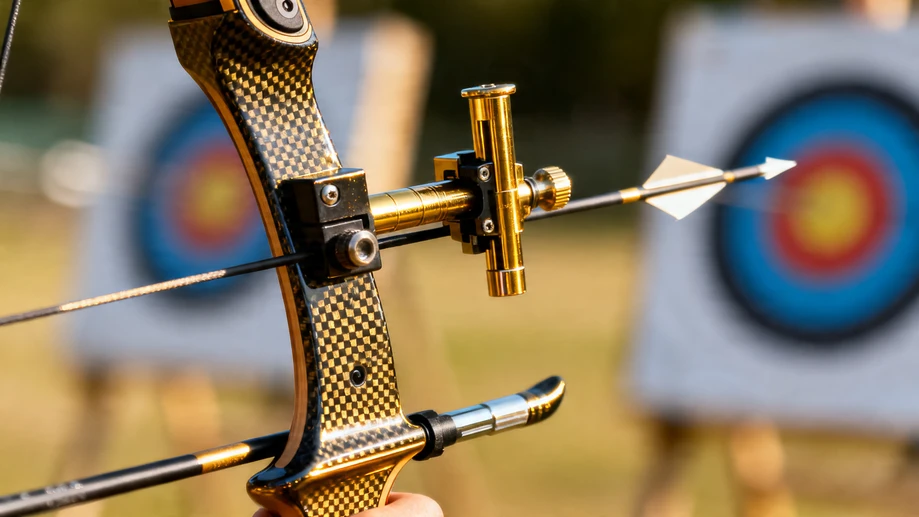
Technological evolution accelerated dramatically post-WWII. Wooden bows gave way to space-age materials: laminated carbon fiber limbs store immense energy, aluminum-carbon arrows maintain laser-straight flight, and stabilizer rods dampen vibrations. Yet governing bodies carefully balance innovation with tradition; World Archery bans electronic sights and release aids in Olympic recurve events. The result is a sport demanding extraordinary coordination – elite archers synchronize back tension, finger pressure, and breath control to achieve sub-millimeter consistency shot after shot.
Beyond competition, archery's accessibility fuels its global renaissance. Over 160 nations participate internationally, with South Korea's systematic training producing 27 of 34 Olympic golds since 1984. Therapeutic programs help veterans rebuild focus, while Paralympic archers demonstrate astonishing precision without full mobility. Urban archery ranges now offer intro sessions where beginners can experience the unique thrill of watching their arrow fly true – a sensation unchanged since Ötzi's time. This democratization completes archery's evolution: from weapon of survival to tool of conquest, and finally, to a sport celebrating human concentration accessible to all.