
The Chess on Ice: Unraveling the Strategic Genius of Olympic Curling
Discover how stones, brooms, and icy precision create one of the Winter Games' most cerebral battles
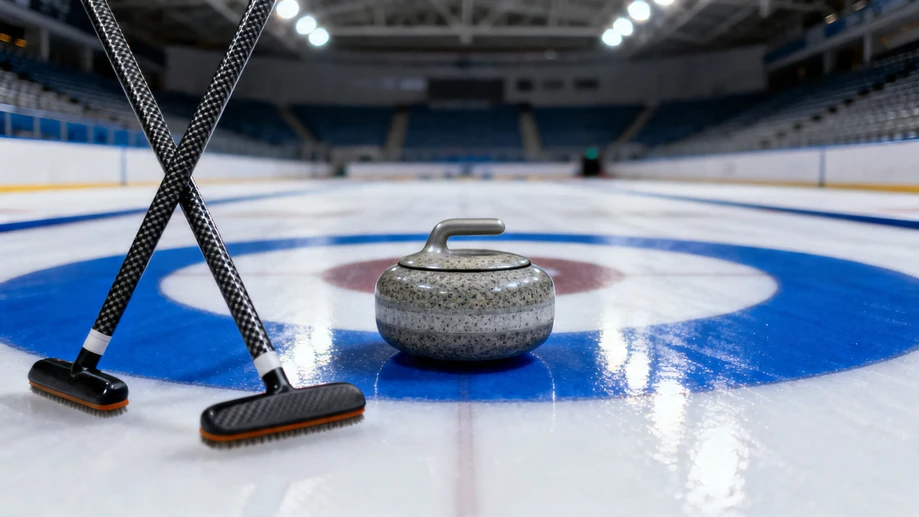
At first glance, Olympic curling resembles a peculiar hybrid of housekeeping and shuffleboard on ice. Teams of four slide 42-pound granite stones across a meticulously prepared 150-foot sheet toward a target called the "house." Yet beneath this deceptively simple premise lies a sport of extraordinary complexity, where every shot carries mathematical implications and psychological consequences. The sweeping motion – that frantic brushing ahead of the stone – isn't theatrical exaggeration but precise temperature control. By melting microscopic peaks on the pebbled ice surface, sweepers alter friction to guide the stone's curl and distance, turning brute force into delicate artistry.
What truly elevates curling beyond physical sport is its intricate scoring system. Only one team scores per "end" (similar to an inning), counting stones closest to the house's center button. This creates constant risk-reward calculations: teams might sacrifice scoring opportunities to position "guards" – protective stones blocking opponents – or execute delicate "takeouts" to remove enemy pieces. The eighth and final end often sees dramatic reversals, as trailing teams leverage the "hammer" (last-stone advantage) for multi-point steals. Such strategic depth earned curling its nickname "chess on ice," where anticipating three shots ahead separates champions from participants.
The ice itself serves as an invisible collaborator. Professional ice technicians maintain the rink at precisely 23°F (-5°C), spraying fine water droplets that freeze into a "pebble" texture. This pebble creates predictable curling lanes, allowing players to exploit the stone's asymmetrical running surface. A clockwise rotation causes the stone to curl left, while counterclockwise rotation sends it right. Masters read these subtle curves like sailors interpret winds, adjusting weight and rotation to navigate around guards or nestle behind cover stones in defensive formations called "bunkers."
Team dynamics reveal another layer of sophistication. While the "skip" (captain) directs strategy from the house, the "thrower" must deliver stones within 0.1 seconds of the skip's timed call. Communication occurs through broom taps: sweepers extend their brushes to indicate desired stone paths like human aiming sights. This silent language prevents opponents from intercepting tactics. Psychological warfare manifests through "pressure stones" – perfectly placed rocks forcing opponents into low-percentage shots. When a skip calls for a "freeze" (touching an opponent's stone without moving it) or a "raise" (propelling a teammate's stone into scoring position), they're executing plays that would impress grandmasters.
Modern technology has refined but not replaced curling's cerebral core. Infrared sensors now measure stone speed to 0.01 mph, while overhead cameras track exact positions. Yet these tools merely enhance the human calculation of "weight" (throwing force) and "line" (delivery angle). At the elite level, teams spend years developing "ice reading" skills – memorizing how each sheet's pebble degrades over hours of play. This environmental awareness allows them to adjust strategies mid-match, much like chess players adapting to an opponent's opening gambit.
Ultimately, curling's brilliance resides in its balance of simplicity and depth. The objective – get closest to the center – remains accessible to newcomers. But mastery requires geometric intuition, risk management, and collaborative precision under pressure. As stones glide toward the house in silent tension, spectators witness not just athleticism but a living geometry puzzle where angles equal advantage and friction equals control. This elegant fusion of physics and psychology makes every slide a calculated statement, every sweep a whispered negotiation with the ice itself.