
The Hidden Science of Curling: More Than Meets the Eye
Discover how physics and strategy transform this seemingly simple sport into a thrilling Winter Olympic spectacle.
Curling, often referred to as "chess on ice," is a sport that captivates audiences with its blend of precision and teamwork. At first glance, it appears straightforward—players slide stones across ice towards a target—but beneath this simplicity lies a world of scientific intrigue. This unique combination makes it a standout event at the Winter Games, where every move is a calculated dance of skill and intellect.
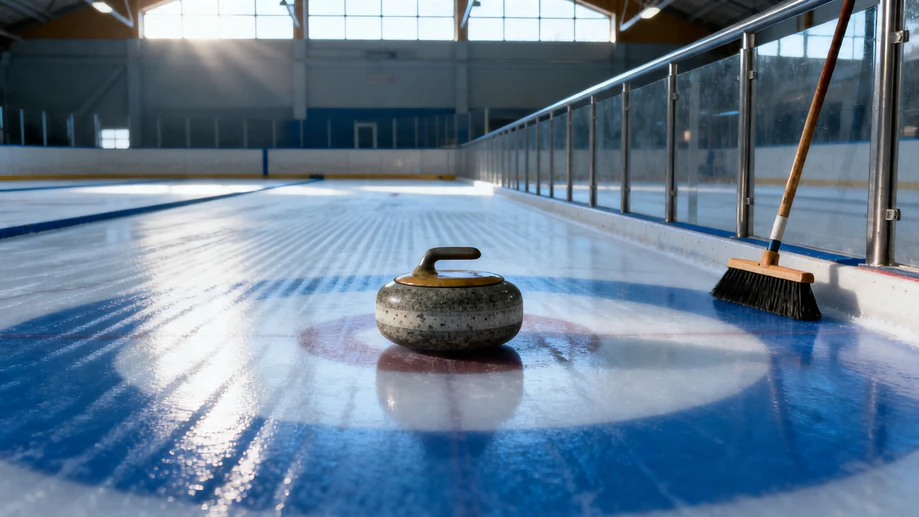
The basic mechanics involve teams of four sliding granite stones towards a circular target known as the "house." As the stone glides, teammates use brooms to sweep the ice surface ahead, altering its path and speed. However, this isn't just about physical effort; it's a gateway to understanding the sport's deeper complexities. For instance, the stones are carefully crafted to specific weights and shapes, ensuring consistent performance, while the sweeping action introduces variables that demand split-second decisions.
Transitioning from rules to the underlying physics, the ice itself plays a starring role. Curling ice isn't smooth; it's meticulously "pebbled" with tiny droplets of water that freeze into bumps. When sweepers vigorously brush the surface, they generate heat through friction, melting a thin layer of ice. This reduces friction, allowing the stone to travel farther or "curl" around obstacles—a phenomenon rooted in thermodynamics and fluid dynamics. Scientists have studied this for years, revealing how even the angle of the broom affects the stone's trajectory, turning each sweep into a high-stakes experiment.
Yet, the science alone doesn't tell the whole story; strategy elevates it to an art form. Teams must anticipate opponents' moves, weighing risks like whether to aim for scoring points or blocking the house. This mental chess involves constant communication, where a single misstep can shift the game. Moreover, the dynamics of team coordination—such as the skip's role in directing plays—highlight how human psychology complements physics, creating a sport that's as much about brains as brawn.
In the context of the Winter Olympics, curling's appeal has soared, drawing global attention not just for its entertainment value but for its educational depth. It showcases how athleticism intersects with innovation, making it accessible to all ages. As the sport evolves, with advancements in ice-making techniques, it continues to inspire fascination, proving that the simplest actions can hide the most profound science.