
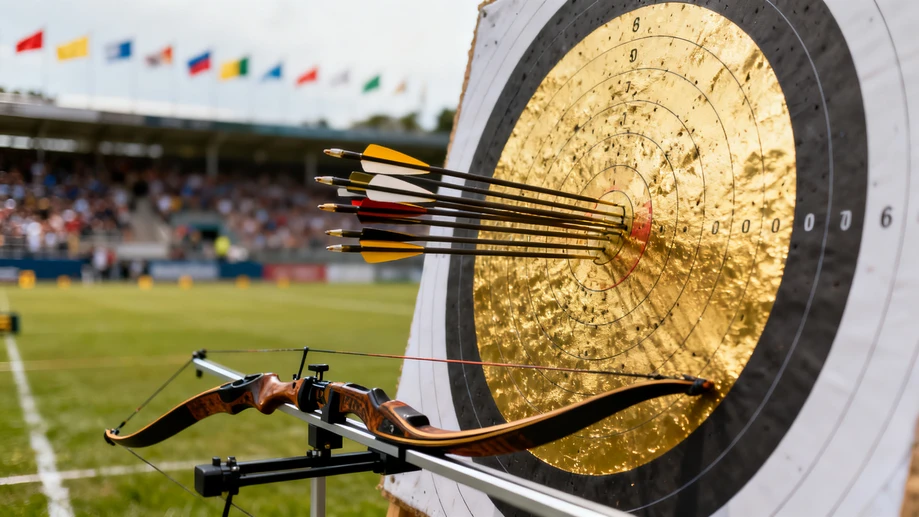
The Silent Tension: How Olympic Archers Master the Art of Focus Under Pressure
Exploring the mental and physical techniques that turn archers into unshakeable competitors on the world's biggest stage.
On the Olympic archery range, time seems to distort. The rustle of flags, distant crowd murmurs, and even the weight of national expectations fade as an archer draws their bow. This ancient sport, revived for modern Games since 1900, demands more than physical precision—it requires absolute mental sovereignty. Unlike explosive track events or chaotic team sports, archery's battlefield is internal. Each competitor stands alone, transforming 70 meters of distance into a psychological canyon where victory is claimed one controlled breath at a time. The stillness before release holds a tension that has captivated audiences for millennia.
Mastery begins with biomechanical poetry. Olympic archers develop muscle memory through thousands of repetitions, perfecting their stance like human tripods. Feet anchor parallel to the shooting line, torso remains perpendicular to the target, and the bow arm extends with unwavering stability. The critical moment arrives during "the hold," where the archer finds alignment between eye, sight pin, and target center. Here, minute tremors become earthquakes; a heartbeat can shift aim by centimeters. Top competitors employ "back tension" techniques, using scapular muscles rather than arm strength to execute the release, ensuring the bowstring slips away without disturbing the arrow's path.
Yet physical technique crumbles without mental fortitude. Olympic archers train their minds like elite samurai, using visualization to rehearse every shot. They see the arrow's flight before nocking it, feel the perfect release in meditation, and mentally catalog wind patterns. Breathing becomes tactical: deep diaphragmatic inhales before draw, followed by slow exhales that lower heart rates. Many adopt pre-shot routines—adjusting tabs, checking fletching—that create neurological anchors for focus. When pressure mounts during tiebreakers, these rituals shield against distraction, turning the roaring stadium into a silent bubble where only the target exists.
Modern equipment elevates this dance between mind and body. Olympic recurve bows are marvels of engineering, crafted from carbon fiber and aerospace alloys. Stabilizers extending front and rear act like gyroscopes, dampening vibrations. Arrows, thinner than pencils yet precisely spined for each archer's draw weight, fly at 240 km/h. The clicker—a small blade device on the bow—provides tactile consistency, signaling when the arrow has reached optimal draw length. Wind flags become crucial allies; archers decode breeze patterns like sailors, adjusting aim by millimeters. This technological symphony serves one purpose: transforming human intention into perfect arrow placement.
As archery evolves, its Olympic legacy remains defined by those transcendent moments of stillness. Whether in Seoul's drizzle or Tokyo's humidity, champions emerge not through brute force but through exquisite control—of muscles, breath, and thoughts. The bullseye is both destination and mirror, reflecting years of solitary discipline. When the arrow finally flies, it carries more than carbon and fletching; it carries the weight of silence conquered, focus forged, and the timeless pursuit of hitting a target smaller than a grape at the length of seven buses.